by Johnny Green
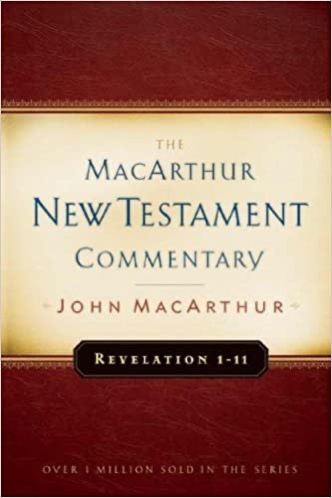
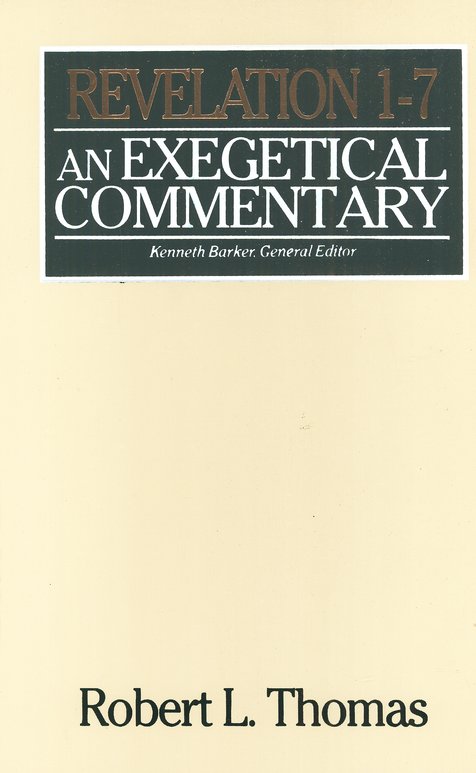
Throughout my three years studying in and teaching through the book of Revelation, The MacArthur New Testament Commentary on Revelation by John MacArthur and Revelation 1-7, An Exegetical Commentary by Robert L. Thomas have been very helpful to me. I would highly recommend both of them to anyone who has a desire to gain understanding of the intricacies of the book of Revelation.
I have several of the John MacArthur commentaries which I have used while studying various other books of the Bible, and I find them to be easy to use and organized in a manner which breaks down the verses into usable form. MacArthur’s commentaries typically go very deep into the breakdown of Scripture, enabling you to understand how the passage fits not only in its context, but also in relation to other passages in the Bible. Because of this, I have found them to be helpful in learning about many parts of the Bible, not just what I am studying at the moment.
Dr. Robert Thomas is widely considered the authority on Revelation, and his writing is very detail oriented like MacArthur’s. Dr. Thomas’ knowledge of the book of Revelation is vast, and coupled with many years as a teaching professor at The Master’s Seminary, he does a fantastic job making his exegesis of Scripture easy to read and understand. His commentary is very valuable in helping you understand the meanings of the many aspects of Revelation which can be hard to understand.
The following article is my application of these two commentaries to the discussion of the seven churches of Asia Minor as found in Revelation 2 and 3.
Overview
In the early part of Revelation, John is sentenced to the island of Patmos, a type of prison island, for spreading the gospel of Jesus Christ. John records the words of Christ in seven letters, referring to the seven churches in Asia Minor. The letters, addressed to the elders of these churches, confront problems in these respective churches. The churches come in the order of the postal route in Asia Minor at that time. The letters accurately lay out the decline of the church as a whole, from the first problem at Ephesus to the worst problems at the church of Laodicea.
The problems faced by these churches certainly are also problems that are common and easily identifiable in churches today. It is important for us to understand the root of these problems and to keep these things ever vigilant in our minds so that our church does not fall into these problems. These things are slippery slopes, and the distance from where the church at Ephesus is to the full-on apostasy at Laodicea is not as far away as it might seem. The goal here is not to give an exhaustive account of the troubles of these churches, rather to provide a view of things we must be diligent about in order not to start down this slope ourselves.
In his commentary, MacArthur lays out the letters indicating each one receives a command and a concern. Most receive a commendation but the last few do not. Also, some information about the city is commonly involved. Each of these cities had problems with the culture and worship of pagan gods, particularly Diana, whose followers were known for their immorality. The churches were all persecuted within these contexts, except the last which was given over to its sin. Only two, Philadelphia and Smyrna, were found completely faithful, and God did not threaten “to take away their lampstands,” which would indicate God removing their church. Each of the others faced this counsel, as well as counsel to repent and turn from their ways. Philadelphia is characterized as “The Faithful Church,” and Smyrna is characterized as “The Suffering Church.”
When faced with sin, the five remaining churches did not appropriately use church discipline to deal with their sin. These letters address sin within the church, not the world outside.
The Church at Ephesus: The Loveless Church (Revelation 2:1-7)
Perhaps the most important church these passages to consider is Ephesus. Ephesus is commended for several things, and it seems to be a church that is busy about God’s work in their community. They have faced persecution and persevered through it. They have faced false teaching in their church and removed it. From the standpoint of appearance, they seem to be about all the things they should.
Here is where the problem begins. Underlying all of these good things is the fact that they have left their first love (2:4). Their passion and fervor for Christ had become a mechanical doing of things because “that is what Christians do.” How easy is this for a church to do? Our attitude and our inner thoughts are imperatives which we must always guard. Do we serve others with love and joy in our hearts, or are we just going through the motions? The command given to this church is to “repent, and do the deeds you did at first” (2:5).
This simple attitude is where the slide begins. As we will see, it is a short but steep fall to the bottom.
The Church at Smyrna: The Persecuted Church (Revelation 2:8-11)
Smyrna does not receive a concern, but they are given counsel. They are very persecuted at the hands of the Roman emperor worshippers and the “synagogue of Satan” (2:9), Jews who regularly put them before the government to avoid problems themselves. This persecution likely keeps them close to Christ, ever in need of His care and provision.
In this letter, God warns the church that they are about to undergo more persecution, and they are encouraged to “Be faithful until death, and I will give you the crown of life” (2:10).
The Church at Pergamum: The Compromising Church (Revelation 2:12-17)
Pergamum represents the next step in the decline. Pergamum had remained faithful to Christ, and persecution had not swayed them. However, verses 14-15 tell us that “[they] have some there who hold the teaching of Balaam… and the Nicolaitans.” A false gospel was beginning to creep into their church.
While the vast majority of the church did not participate in the errors of these groups, the problem was that they allowed it. They did not put a stop to heretical teaching in the church. By not exercising church discipline, they were being disobedient to God, and this would bring His judgment if they did not repent and stop.
The Church at Thyatira: The Church that Tolerated Sin (Revelation 2:18-29)
Thyatira was not a city where worship of other pagan gods led to great persecution, but they receive a commendation from the Lord for their “love and faith and perseverance…” (2:19). However, the problem in this church is twofold. As described in verse 20, the woman Jezebel (likely not the same Jezebel seen elsewhere in the Bible) was tolerated. First, she was preaching, thus violating 1 Timothy 2:12 and the roles given to women in the church. Second, she was teaching a false religion, and “[lead bondservants] astray so that they commit acts of immorality and earth things sacrificed to idols” (2:20).
The sin of their church was going a little deeper than those before them. Apparently more of their members were involved, and we see the slide continue as they become tolerant of a false gospel. Those who did not go along with this had no other burden placed upon them. Obviously, this steadfast group was a smaller group than at Pergamum.
The Church at Sardis: The Dead Church (Revelation 3:1-6)
Sardis literally had become blind and weak: appearing to be a healthy church but having no love of Christ in them. They had denied the only source of Spiritual life. We do not know exactly the problem here, but that Christ says “I have not found your deeds completed in the sight of My God” (3:2).
There were only a few true believers remaining in this church. Thus the slide has now come to the point where a church exists with very few believers.
The Church at Philadelphia: The Faithful Church (Revelation 3:7-13)
No concern is mentioned at the Church at Philadelphia. They had many commendations, and were commanded basically to continue in their perseverance and faithfulness to God and His Word.
The Church at Laodicea: The Lukewarm Church (Revelation 3:14-22)
Laodicea was the last stop on the Revelation letters’ postal route. This was also the church who had gone away from God, prompting the famous verse: “I know your deeds, that you are neither cold or hot…” (3:15). “Hot” refers to people who are spiritually alive and possess a transformed life. The spiritually “cold” have rejected Christ. They were not “hot” enough to restore, and as a result, they will be spit out of Christ’s mouth (3:16).
They relied on themselves instead of God, and because of this, they have no believers. Do churches like this exist today? Unfortunately so.
These churches represent various degrees of belief among their parishioners. As we see, once a church loses its first love–the love of Christ–it is a short jump to becoming a church that is only lukewarm, allowing any kind of false gospel, and rejecting the church discipline to even remove falsehoods from among God’s church. Let us learn from these churches and be vigilant about the things which will maintain us as a church body with which God can be pleased. The loss of the love of Christ is the beginning. The ending is separation from God. Let us be found faithful.
If you would like to read John MacArthur’s commentary for yourself, click here. If you would like to read Robert Thomas’ commentary for yourself, click here.

 Corinth Baptist Church